LAFAYETTE SQUARE
LAFAYETTE SQUARE
AUGUST 14, 2026
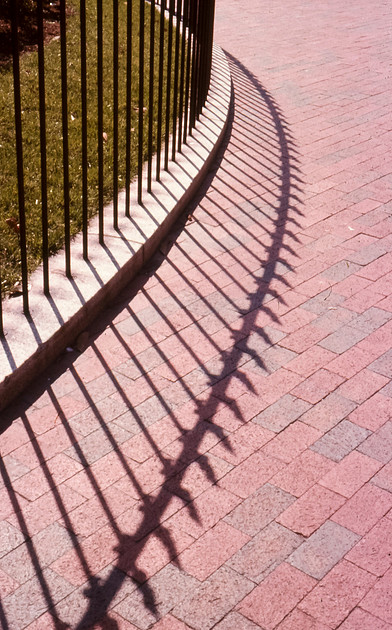
 A RAIL, ITS SHADOW, AND A BRICK PAVEMENT
This week I would like to describe my process in creating another of the images in my new book, Urban Fragments. This image is an exemplary example of both the strengths and weaknesses of my approach to capturing images in the urban environment.
This image was captured some forty years ago in Lafayette Square across from the White House. The square is a small oasis on Pennsylvania Avenue, notable for its urban qualities and it’s clear view of the White House across the street, as well as a heroic statue of Andrew Jackson on horseback. The square gained notoriety during the Black Lives Matter demonstrations when the President used troops and helicopters to clear the square and showed his respect for religious freedom by holding the Bible upside down. Since then in the general tumult of Trump’s war on D.C., the square has suffered from design depredations that have not gotten the press of larger fights across the District. I have not kept up with its current state.
If you want to know what the square used to feel like, I would recommend viewing “Seven Days in May”, a classic piece of American paranoia about a barely thwarted military coup. In the midst of a classic film, you can see what was once one of the best places in Washington to peacefully petition the government, right on the street in front of the White House.
In any case on a sunny and no doubt too hot day I found myself poking around the square with my camera and captured this image of a small section of the Square’s characteristic railings that divided the paths from the plantings. I was probably intrigued by the resemblance of the railings to the squares that I had learned to love in Bloomsbury in London, and the irony of this most British of squares across the street from the one of the symbols of the historic break with the British Empire. I was mostly struck by the curve of the fence and its accompanying shadow on the brick sidewalk. This is the real subject of this image, a small fragment of urban geometry that I tried to highlight with my camera.
I would daresay that this image of the square is more about shade and shadow, urban materials and geometry than any postcard view of Washington, D.C. Even lifetime denizens the Nation’s capital would be forgiven if they could not place the location of this image, but that is what appeals to me. It is a clear example of my effort to capture an urban fragment that might provide a clearer view of the ambience of Washington than a more conventional overall view. The fact that it might now also be historic says a lot about our country’s ability to ignore its own history.
